Water heaters rarely choose a convenient time to fail. Changes in temperature, recovery, sound, water colour or the condition around the tank can provide useful warning before complete loss of hot water.
Do not open sealed fuel, electrical or pressurized equipment. If water is actively escaping or wastewater is present, call for service and keep clear of hazards.
Hot water runs out sooner
Reduced usable capacity can point to sediment, controls or an aging tank.
Temperature becomes inconsistent
A system that alternates between hot and lukewarm needs assessment.
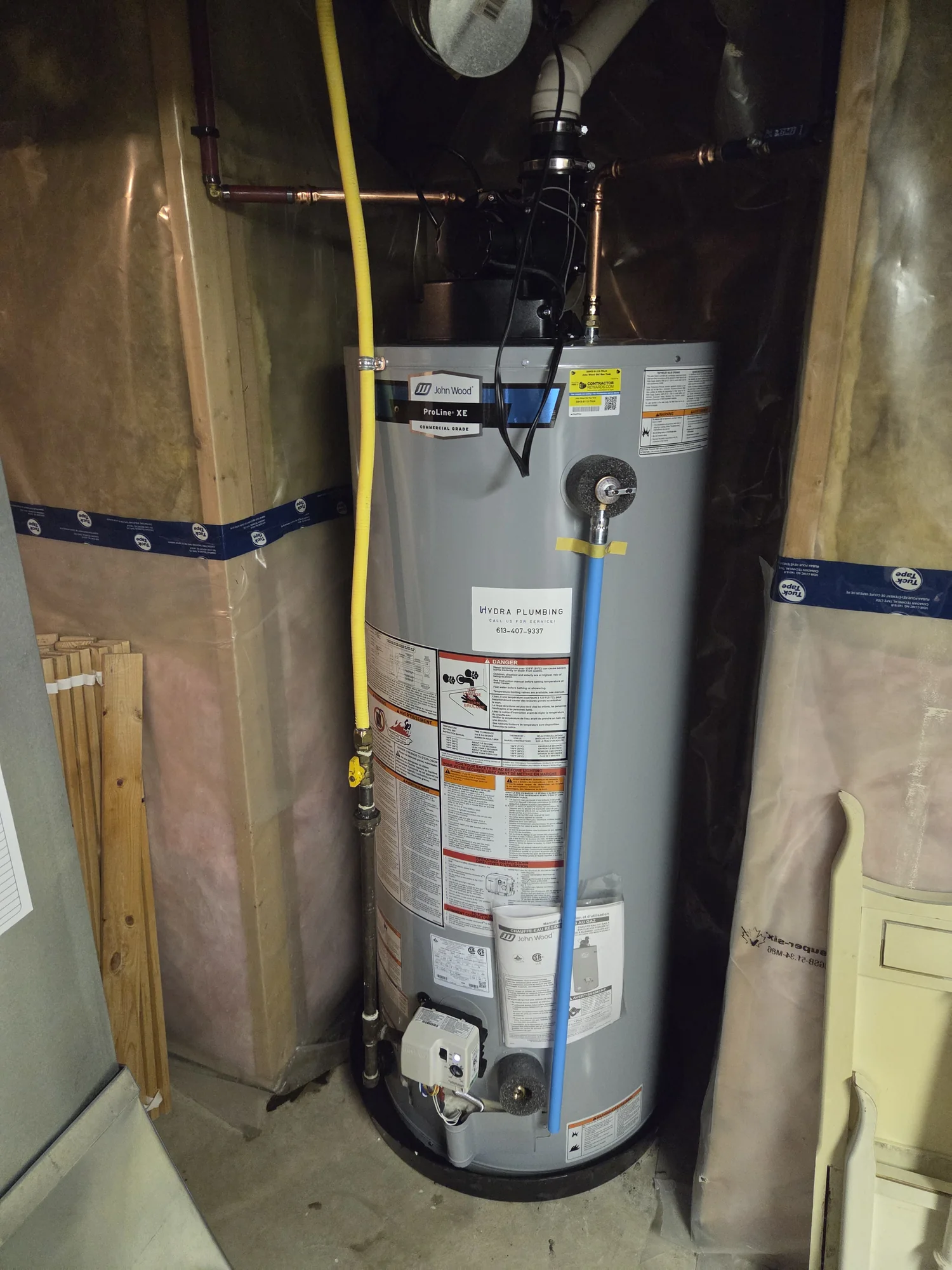
Water appears around the tank
Treat moisture at the base, valves or connections as an active leak until proven otherwise.
The system makes new noises
Popping, rumbling or banging can be related to sediment or changing operating conditions.
Rust or corrosion is visible
Corrosion around the tank or fittings can indicate a developing failure point.
The water looks or smells different
Changes may come from the heater, piping or water supply and should be traced carefully.
Recovery takes longer
Slow reheating can indicate reduced performance or a failed component.
Fuel or power issues recur
Repeated resets, ignition trouble or breaker trips need qualified inspection.
The pressure-relief area is wet
Do not cap or disable a safety valve; have the cause assessed.
The unit is near its expected service life
Age does not prove failure, but it changes the repair-versus-replacement calculation.
The practical next step
Use the evidence you can observe, then get the system assessed.
Photos, timing and which fixtures are affected can all help. A qualified inspection turns those observations into a repair or replacement recommendation.