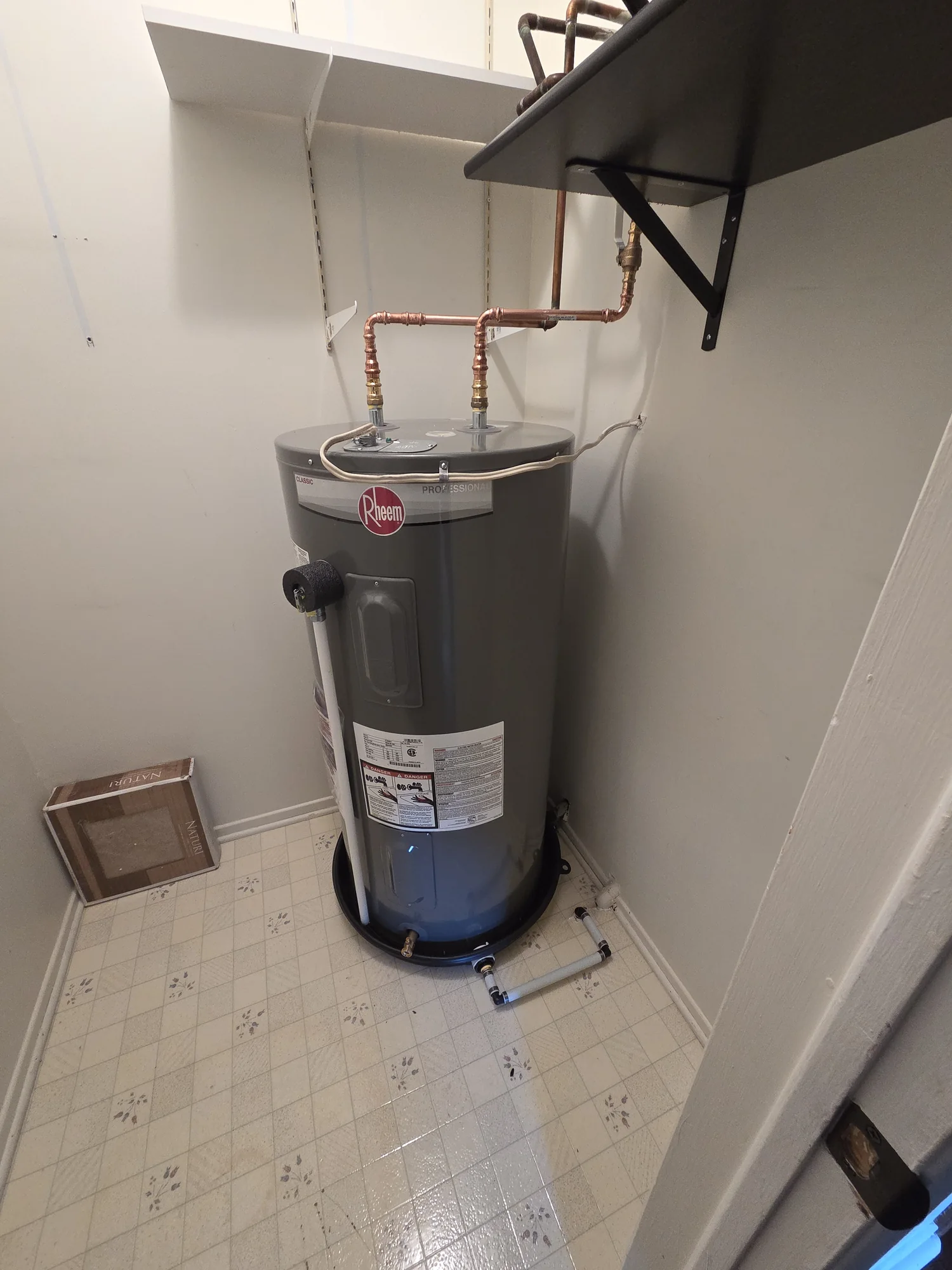
Gas and electric water heaters in Ottawa
Choose the fuel source and tank that make sense for your home.
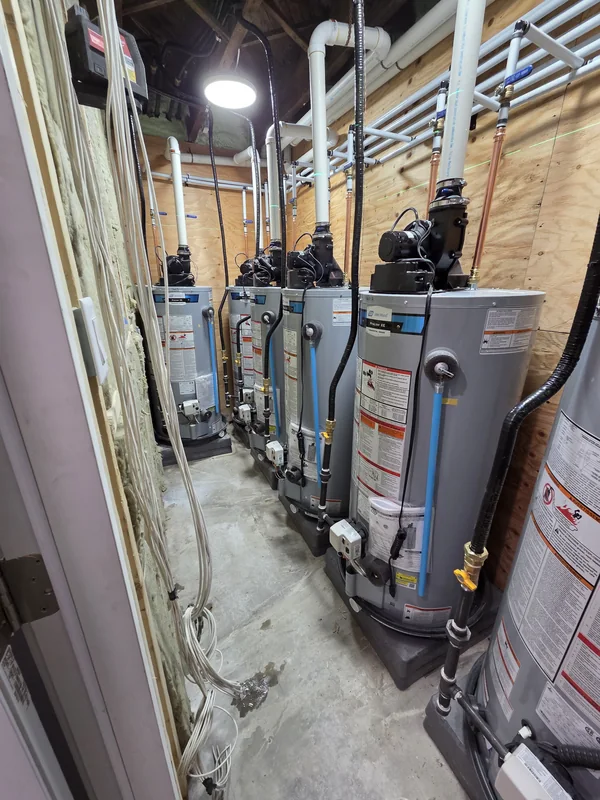
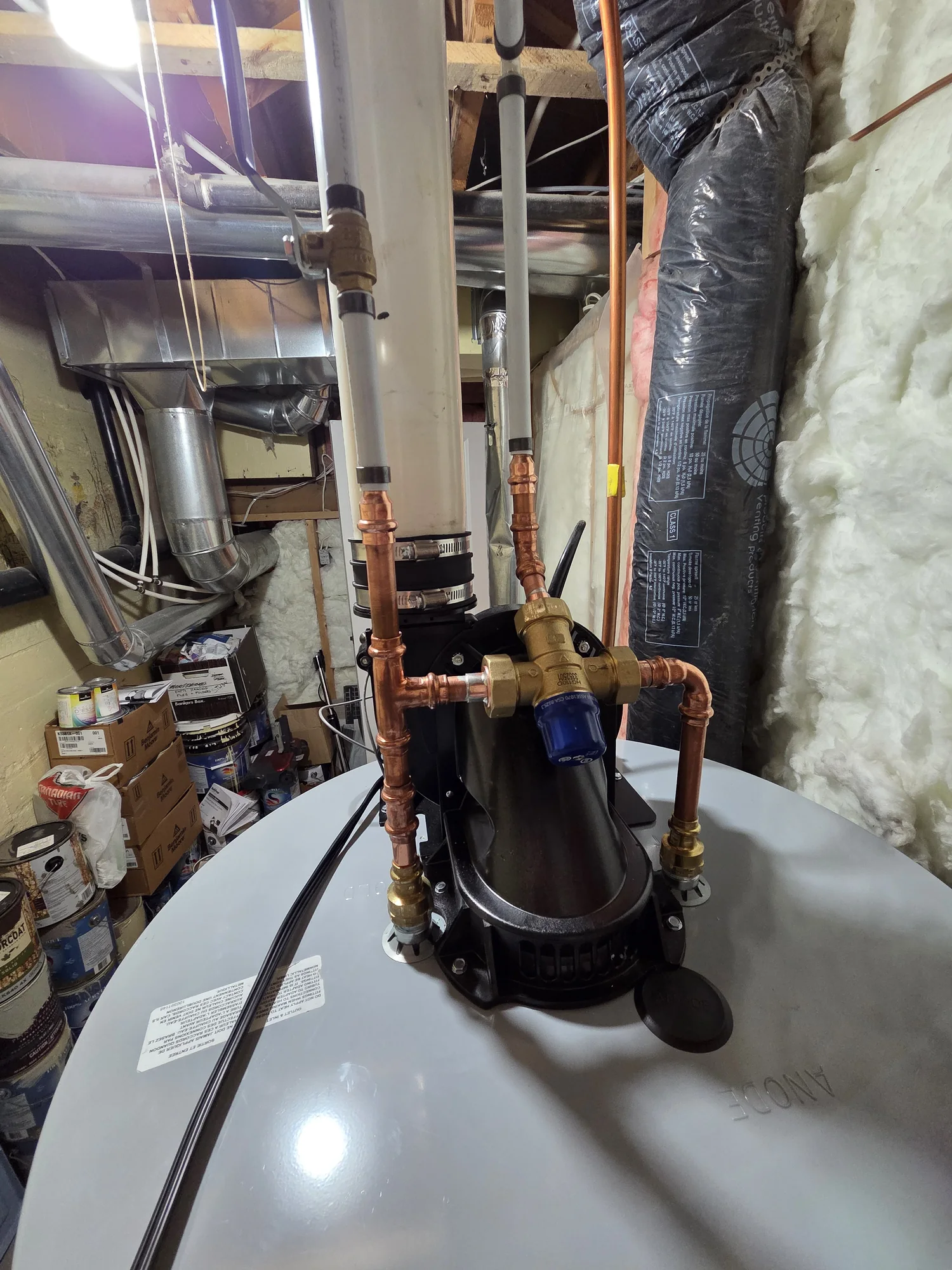
A conventional hot-water tank can be a dependable and affordable choice when it is matched to household demand and the utilities already serving the property. Hydra Plumbing installs and services gas-fired and electric water heaters across Ottawa and Orléans.
We compare recovery rate, tank capacity, available gas or electrical service, venting, installation space and expected operating habits. You receive a clear explanation of what changes with each option, what can stay as it is and which system offers practical value for the home.
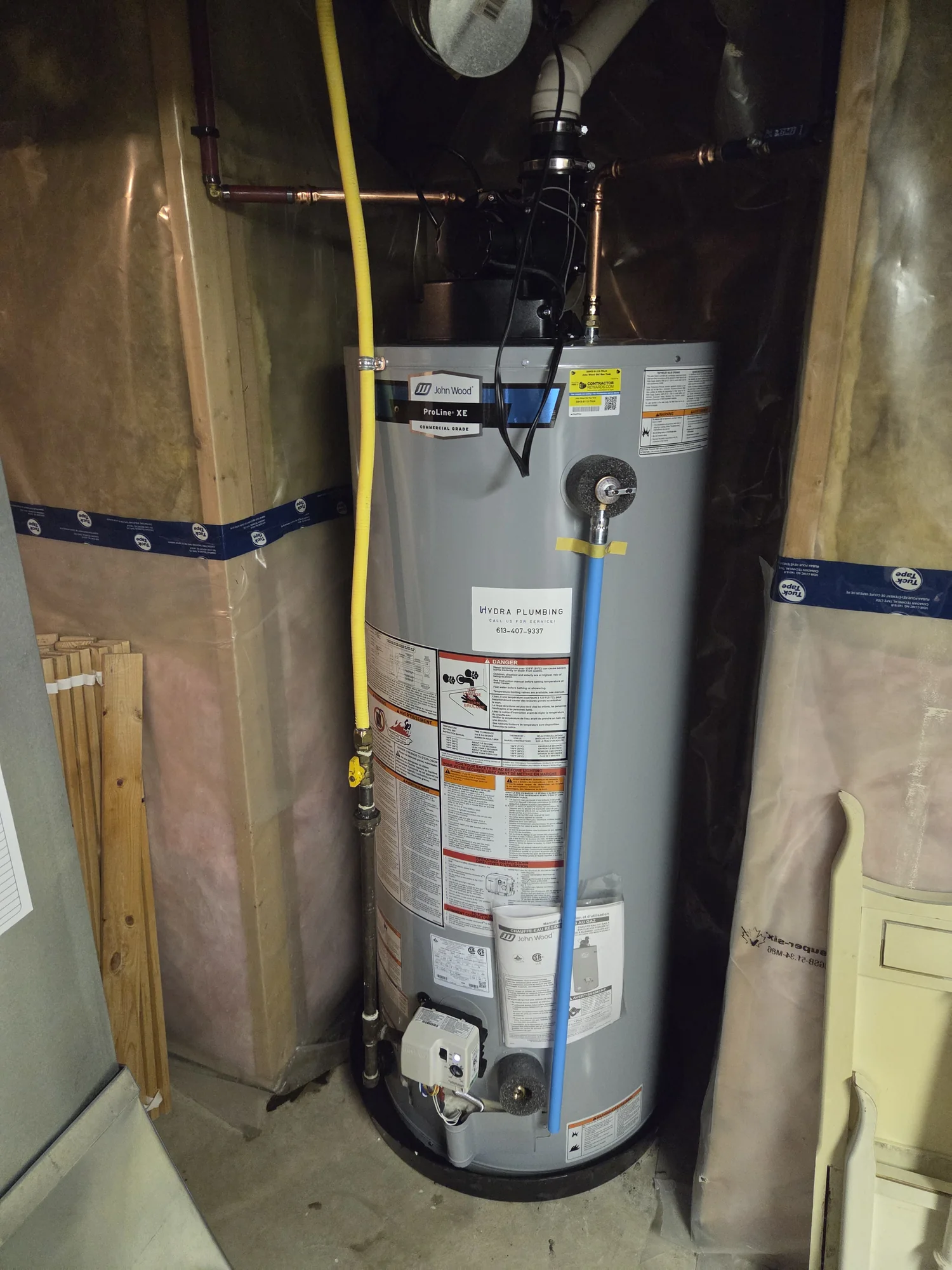
Gas or electric
Compare how each conventional water heater serves the household.
The best energy source is often the one the property can support safely and economically. Equipment cost is only part of the decision because utility upgrades, venting, recovery speed and household demand can change the complete installation.
Gas water heaters
Gas-fired storage tanks generally offer strong recovery for busy households. They require suitable gas capacity, combustion air and venting, so the complete installation must be reviewed before replacement.
Electric water heaters
Electric hot-water tanks avoid gas venting and can be a straightforward fit where the panel and circuit have enough capacity. Element output and tank size affect how quickly hot water recovers after heavy use.
Capacity and recovery together
Tank volume tells only part of the story. Recovery rate, incoming water temperature and back-to-back showers determine whether the system keeps up when the household is busiest.
When to compare systems
Review gas and electric options before the old tank limits the decision.
- The current water heater is leaking, corroded or nearing replacement
- Hot water regularly runs out during normal household use
- A renovation is changing fixture count or daily demand
- The home already needs gas, venting or electrical work
- You want to compare recovery speed and operating characteristics
- A planned replacement gives you time to review equipment choices
Water heater comparison process
How we help you compare gas and electric water heaters.

Review the current heater and hot-water use
We note the existing fuel source, tank size, equipment age and the reasons for replacement. Household size, back-to-back showers, laundry and other peak use help establish the capacity and recovery you actually need.

Check the utilities and installation space
The available gas line, venting, combustion air, electrical panel, circuit, drainage and mechanical-room access are reviewed. This shows whether the home already supports a straightforward replacement or whether a change of energy source would require additional work.

Compare equipment, recovery and complete cost
We explain how suitable gas and electric models differ in recovery, installation requirements, controls and operating characteristics. Equipment and required connection work are considered together so the comparison reflects the full project.

Confirm the recommendation and installation scope
You receive a clear recommendation, equipment option and quote that identifies removal, installation, utility work and testing. Once approved, the replacement is scheduled and the selected system is installed as a complete hot-water setup.
Pricing context
What affects gas or electric water-heater installation cost.
- Tank capacity, recovery rate, efficiency and warranty
- Gas line, venting and combustion-air requirements
- Electrical panel, circuit and disconnect requirements
- Access, removal and disposal of the existing heater
- Water-line, shutoff, drainage and installation-base changes
- Permit, inspection and code requirements for the selected system
A better equipment decision
Choose a water heater based on the home, not a generic comparison.
Understand whether the existing gas or electrical setup already supports a sensible replacement before adding upgrade costs.
Match tank size and recovery to showers, laundry and dishes so normal routines are less likely to compete for hot water.
Compare equipment and required connection work together instead of choosing a tank price without the installation context.
Review expected recovery, controls and normal operation before the installation is complete.